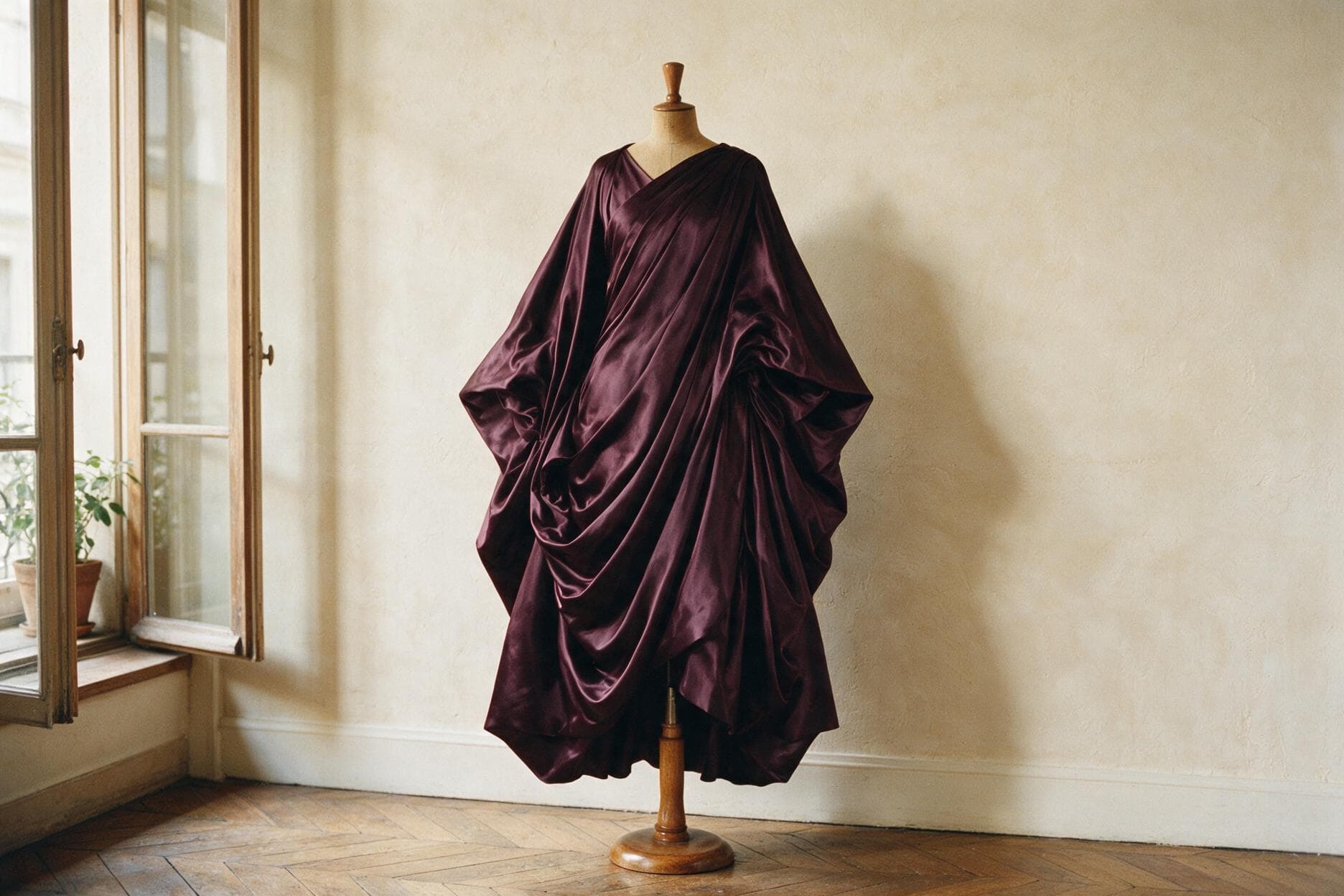
On 30 April 2026, Google shut down Doppl, its standalone virtual try-on app, and folded the technology back into Search.
That looked like a retreat. It wasn’t. Google’s try-on now runs directly on non-sponsored product listings and apparel image results across Search, at no charge to merchants. And per Google’s Merchant Center documentation: “Any merchant with a shopping feed and who is eligible to show free listings is automatically opted into this feature.”
Automatically. Not opt-in. Not a beta you apply to.
There’s one detail almost nobody mentions, and it’s the one that matters most if you’re reading this from Paris, Lyon, Dubai or Riyadh.
Is Google’s virtual try-on available in France or the Gulf?
No. Not yet. Google’s documentation lists 18 countries and regions: the United States, United Kingdom, Canada, Australia, Argentina, Brazil, Chile, Colombia, Hong Kong, India, Indonesia, Japan, Malaysia, Mexico, the Philippines, Singapore, South Korea and New Zealand. No EU member state. No UAE, no Saudi Arabia. Checked 24 August 2026.
But read that list again with your export markets in mind.
If you ship to the UK, the US or Canada — and a great many French and Gulf brands do — then your products may already be appearing with a try-on button there, generated from your feed images, without anyone telling you. You’re not in the feature at home. You may well be in it abroad.
That’s worth ten minutes of your attention this week.
What exactly did Google ship?
A free, default-on virtual try-on on Google’s own surfaces. The shopper taps “Try It On” and uploads a full-length photo. It covers shoes, tops, bottoms and dresses; lingerie, swimwear and accessories are excluded. It appears only on non-sponsored results — not on Shopping Ads. There’s no toggle in Merchant Center: opting out means contacting Google support.
The category timeline tells you how hard this was: tops and blouses in 2023, dresses in September 2024, then shirts, pants, skirts and dresses in May 2025.
When Google extended to dresses, it published why it was difficult. On its own blog, Google described dresses as “often more detailed than a simple top in their draping, silhouette, length or shape,” and said its prior approach to swapping garments would “smudge the person’s features or obscure important details of their body” because dresses cover far more of the body than tops do. Switching to higher resolution alone didn’t fix it either — Google said the standard approach “often resulted in the loss of a dress’s critical details.”
Two years for the best-resourced team in the field to get from tops to skirts. Worth holding on to when someone tells you try-on is a solved problem.
Why does this matter if it isn’t here yet?
Two reasons, and the second is the one that should change what you do this quarter.
One: Google just set the price of try-on at zero. Not in your market today. But the direction of travel is one way — from a handful of countries to 18, from tops to dresses to skirts, from a standalone app into Search itself. Whatever your on-site try-on is worth to you, plan on the rendering part of it being worth nothing within a couple of years.
Two: you have a window that merchants in 18 countries no longer have. In the US and UK, “we do virtual try-on” already competes with something free, one tab away. In France and the Gulf it doesn’t — yet. That’s not a reason to relax. It’s a reason to decide now what your on-site experience is actually for, so that when Google does arrive you already have an answer that isn’t “we also render garments.”
What does it mean that the rendering became free?
Try-on generation has become commodity infrastructure. FASHN sells it through an API at published rates well under a dollar an image, dropping further on commitment plans. AWS has shipped VIRTUAL_TRY_ON as a task type inside Amazon Nova Canvas on Bedrock since July 2025, billed as a standard model invocation. Google gives it away in 18 countries.
Meanwhile the Shopify App Store has filled up. We went through the apparel try-on apps in August 2026: most have no reviews at all, and a large majority launched within the previous twelve months. Pricing lands in a narrow band — roughly $8–$20 to start, $99–$149 at the top, with per-render overage between about $0.08 and $0.16.
That’s what a commodity market looks like at the start of a land rush. Anyone whose entire pitch is “we do try-on” is reselling something three hyperscalers already give away or sell near cost.
What can Google’s try-on never do?
It can’t ask your customer what she’s actually shopping for, and it can’t answer from your catalogue. Google’s try-on is a rendering step attached to a product listing. It doesn’t know there’s a wedding in October, it has no view of your collection, and it has no reason to build her an outfit rather than show her one dress.
That gap isn’t a temporary limitation. It’s structural.
Google’s incentive is to serve the query and route the click. A conversation about one woman’s specific occasion — outdoor wedding, September, in the wedding party but not the bride, doesn’t want to be cold at 11pm, around €250 — is not a query Google wants to own. Answering it from a single brand’s catalogue is something Google will never do, because it would mean picking a brand.
That’s the part that has to happen on your site. And it’s the only part worth paying for.
What we’d do this quarter if we ran a Shopify fashion store
Check your export exposure. If you sell into any of the 18 covered countries and you’re eligible for free listings, your products are likely already in Google’s try-on there. Go and look at how three of your bestsellers render.
Fix your feed images before anything else. Google wants at least 512×512, ideally 1024px or higher, one garment on one front-facing model or mannequin. For lay-flat shots specifically, Google advises avoiding excessive folds or wrinkles, and says garment details shouldn’t be covered by hands, handbags or accessories. This improves Google’s render, your own product page, and anything you add later. Highest-return hour on this list.
Don’t buy a try-on button on the strength of a conversion claim. Check the sourcing on any number you’re shown. We audited this category’s statistics and published what we found — most of them have no traceable source.
Ask what happens before the try-on. If the answer is “the customer finds a product and presses a button,” you’re buying a widget that already competes with something free in 18 countries and will compete with it in yours.
Measure adoption first. Not conversion lift — adoption. What percentage of product page visitors actually engage? That number decides everything downstream, and almost nobody publishes theirs.
FAQ
- Is Google’s virtual try-on available in France?
- Not as of 24 August 2026. Google’s documentation lists 18 countries and regions and no EU member state is among them. French merchants shipping to covered markets such as the UK, US or Canada may still see their products appear with try-on there.
- Is it available in the UAE or Saudi Arabia?
- Not as of 24 August 2026. Neither appears in Google’s published country list.
- Does Google charge merchants for virtual try-on?
- No. It runs on free, non-sponsored product listings, and Google’s documentation states that any merchant with a shopping feed eligible for free listings is automatically opted in.
- How do I opt out of Google’s virtual try-on?
- There’s no self-service toggle in Merchant Center. Google directs merchants to contact Customer Support through the Merchant Center Help menu to have the Try-On button removed from their listings.
- Which products does it cover?
- Shoes, tops, bottoms and dresses. Lingerie, bathing suits and accessories are excluded. It appears on non-sponsored product results and the Shopping tab, not on Shopping Ads.
- What image quality does Google need?
- At least 512×512, ideally 1024px or higher, showing only the listed garment, on a model facing directly forward with arms down at the side. For flat-lay images, avoid excessive folds or wrinkles. Don’t cover garment details with hands, handbags or accessories.
- Did Google shut down its try-on app?
- Google shut down Doppl, its standalone consumer try-on app, on 30 April 2026, directing users to Google’s try-on experience on product listings and apparel image results across Search. The technology was consolidated, not retired.
Sources. Google Merchant Center Help, virtual try-on for merchants (accessed 24 August 2026) · Google Merchant Center Help, image requirements for virtual try-on · Google Labs, Doppl shutdown notice · Google Shopping blog, “Virtual try-on for dresses,” 5 September 2024 · TechCrunch, “Google expands AI-powered virtual try-on tool to include dresses,” 5 September 2024 · AWS, Amazon Nova Canvas virtual try-on update, 2 July 2025 · FASHN published API pricing · Shopify App Store listings, reviewed 24 August 2026.
Last updated 24 August 2026.